
Are you getting dumber?
That may sound harsh, but it’s a fair question in a world where most of us barely use our hands to write anymore.
We type. We tap. We swipe. We dictate into our phones. We ask software to organize our thoughts, finish our sentences, and remind us what we were supposed to do next.
Convenient? Absolutely.
But there may be a hidden cost.
Years ago, I invested in my first Kickstarter project. It was for The Best Self Co. SELF Journal, a goal-setting journal designed to help people clarify their priorities, track their habits, and make steady progress toward meaningful goals.
Around that same time, I read an interview with Matt Furey, a fitness expert and email marketer known for his personality-driven writing. In the interview, he talked about the power of handwriting.
Furey said he writes in his journal every day—in cursive. He even writes his name backward, almost as if you were looking at it in a mirror.
Odd? Maybe.
But his point was fascinating. He believes people are not using their hands enough anymore, and that this lack of use may affect how sharply we think.
Why Handwriting Matters to the Brain
There is a concept sometimes connected to this idea called the homunculus, a visual representation of how much of the brain is devoted to different parts of the body.
The hands take up a significant amount of neurological real estate. In other words, your hands are deeply connected to your brain’s motor functions. When you use your hands with precision—writing, drawing, building, sketching, or even playing an instrument—you are doing more than moving muscles.
You are engaging the brain.
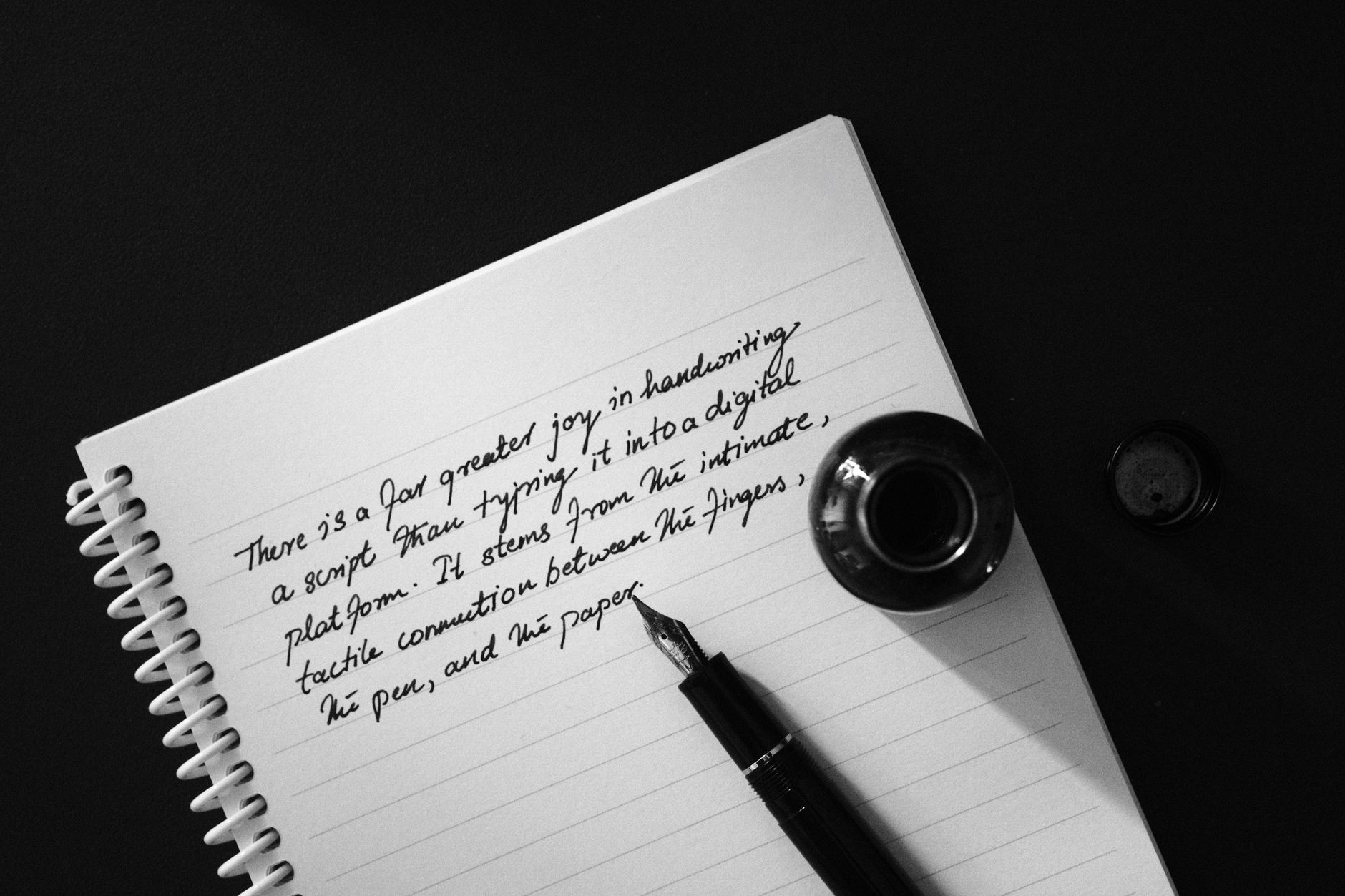
This is why handwriting can feel different from typing. Typing is fast, efficient, and useful. But handwriting slows you down. It forces you to process what you are thinking. It makes you shape each word manually. And when you write in cursive, you add rhythm, movement, and flow to the process.
That matters.
Writing by hand can help you think more deeply, remember more clearly, and connect ideas more intentionally. It is not just a nostalgic habit from the past. It is a practical tool for better thinking.
Journaling Helps You Capture Better Ideas
One of the biggest benefits of journaling is that it helps you capture your ideas before they disappear.
And ideas do disappear.
You can have a brilliant thought while driving, showering, walking, reading, praying, exercising, or drinking your morning coffee. But unless you capture that idea, it often floats away. Later, all you remember is that you had a good thought. The thought itself is gone.
That is why writing things down is such a powerful discipline.
The more you train your brain to notice ideas, the more ideas you will notice. The more often you write those ideas down, the more likely you are to do something with them.
This is especially important for entrepreneurs, marketers, writers, sales professionals, and business owners.
Marketing depends on ideas.
You need ideas for blog posts, emails, offers, headlines, lead magnets, social media posts, client conversations, sales pages, presentations, and follow-up campaigns. You need ideas for solving customer problems. You need ideas for standing out in a noisy marketplace.
If you are not regularly capturing your thoughts, you are probably leaving some of your best marketing ideas on the floor.
Goal-Setting Is a Thinking Discipline
The Best Self Co. SELF Journal was built around a simple but powerful truth: successful people write down their goals.
That does not mean writing down a goal magically makes it happen. There is no fairy dust in the paper.
But writing down your goals forces you to define what you want. It moves a vague desire into a concrete statement. It gives your brain something specific to focus on.
There is a big difference between thinking, “I should improve my marketing,” and writing, “This week, I will send three follow-up emails to past prospects.”
One is a wish.
The other is a plan.
Daily writing rituals also help create a positive environment for progress. When you sit down each day and review your goals, write your priorities, and capture your thoughts, you are telling your brain what matters.
You are training your attention.
And in business, attention is everything.
Better Thinking Makes You a Better Marketer
At first glance, journaling may not seem directly connected to marketing. But in the long run, it absolutely is.
To become a better marketer, you need to become a better thinker.
You need to understand people. You need to observe patterns. You need to recognize problems. You need to ask better questions. You need to connect your product or service to what your customer actually wants.
That kind of thinking does not happen by accident.
It comes from reflection, study, experimentation, and disciplined observation.
If you want to stand out from your competition, you cannot simply copy what everyone else is doing. You need fresh ideas. You need better angles. You need deeper insight into your market. You need to notice what others miss.
Writing helps you do that.
It gives your thoughts a place to land. It helps you sort through confusion. It allows you to spot connections. It turns mental clutter into usable material.
Make Handwriting Part of Your Daily Success Ritual
You do not need an elaborate system to get started.
You can begin with a simple notebook and a pen.
Each day, write down your top goals, your best ideas, your most important task, and any observations about your customers, your business, or your marketing.
Write questions such as:
- What does my customer need most right now?
- What problem keeps showing up again and again?
- What offer could I make clearer?
- What content would be genuinely helpful?
- What idea have I been ignoring?
Over time, these small daily entries can become a goldmine.
They can turn into blog posts, sales angles, client solutions, product ideas, podcast topics, email campaigns, and better business decisions.
The point is not to write perfectly.
The point is to think actively.
Your brain was not designed to be passive. It was designed to notice, connect, create, and solve.
So put your hands to work. Pick up a pen. Write things down. Capture your ideas. Review your goals. Build the habit of thinking on paper.
Because in a noisy, distracted, automated world, the person who can still think clearly has a serious advantage.
Here’s to developing more “brain gain”—and avoiding the slow slide into “brain drain.”